The Burner
Hand-crafted copper, brass and stainless steel
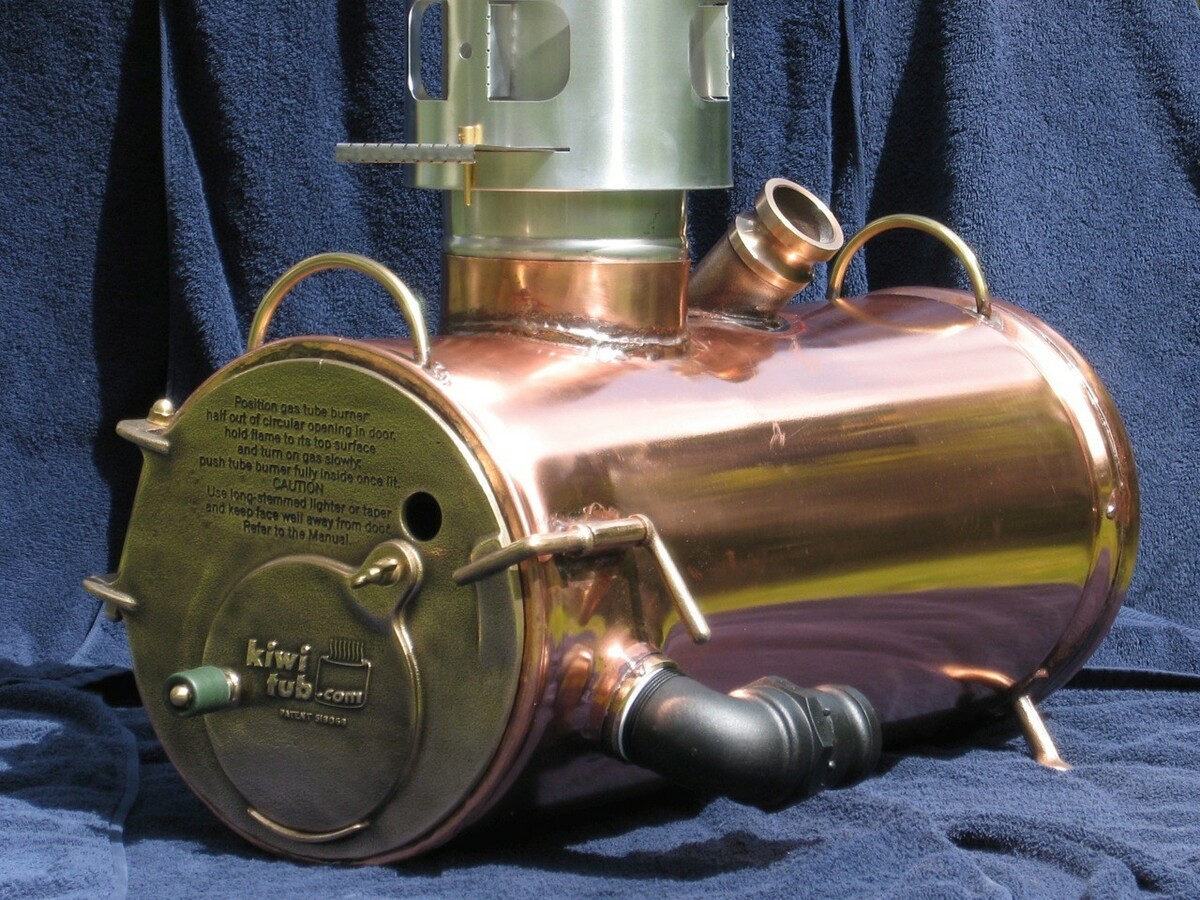
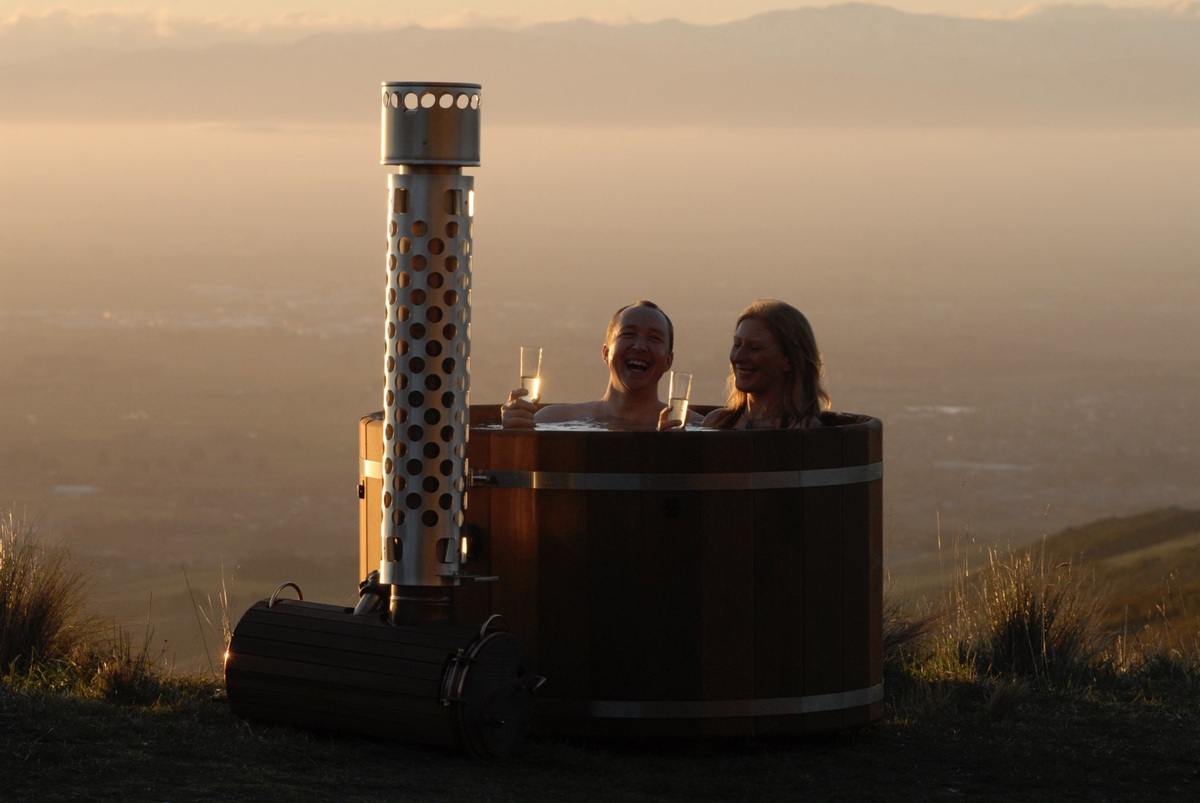
The kiwitub burner is a multi-fuel water heater designed to run on firewood, LPG gas or other solid fuels. It heats the tub quickly, usually in well under two hours, and works without pumps, motors or electricity.
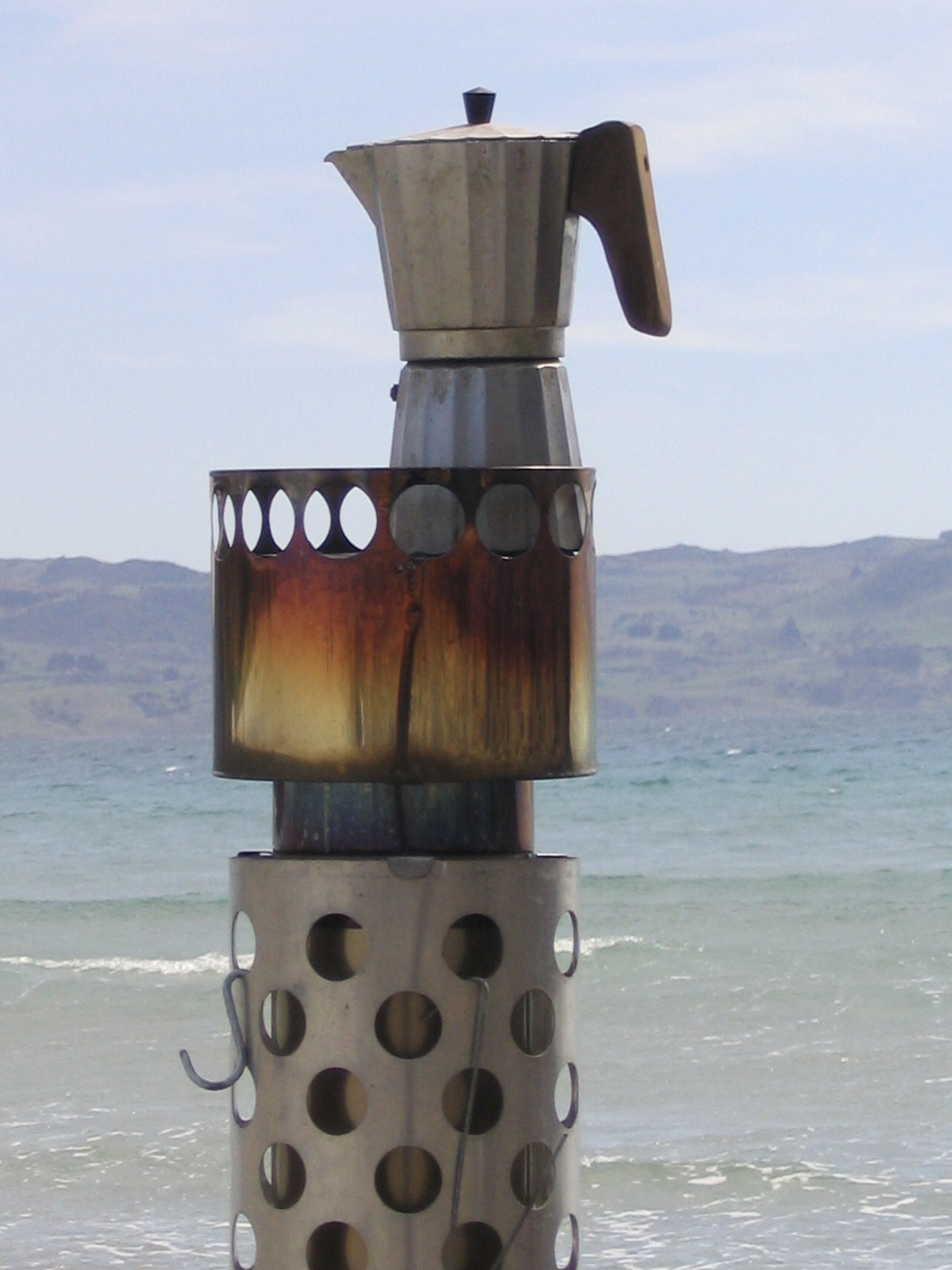
You can also make coffee on it.
The burner is made from two horizontal copper cylinders, one inside the other, with water between them. Fire or gas heats the water surrounding the central chamber. As the water heats, it expands and rises through the top hose into the tub, while cooler water flows back into the burner through the lower hose.
This creates a natural convection loop, just like a wetback on a domestic woodburner. The circulation is driven by physics, not machinery.
Inspired by a New Zealand classic
The kiwitub burner is essentially a giant mutated Thermette, lying on its side and built for a hot tub.
The Thermette is a classic New Zealand invention from the late 1930s: a water-heating kettle with a fire up its middle. The kiwitub burner takes the same basic principle and develops it into a tough, highly effective outdoor water heater.
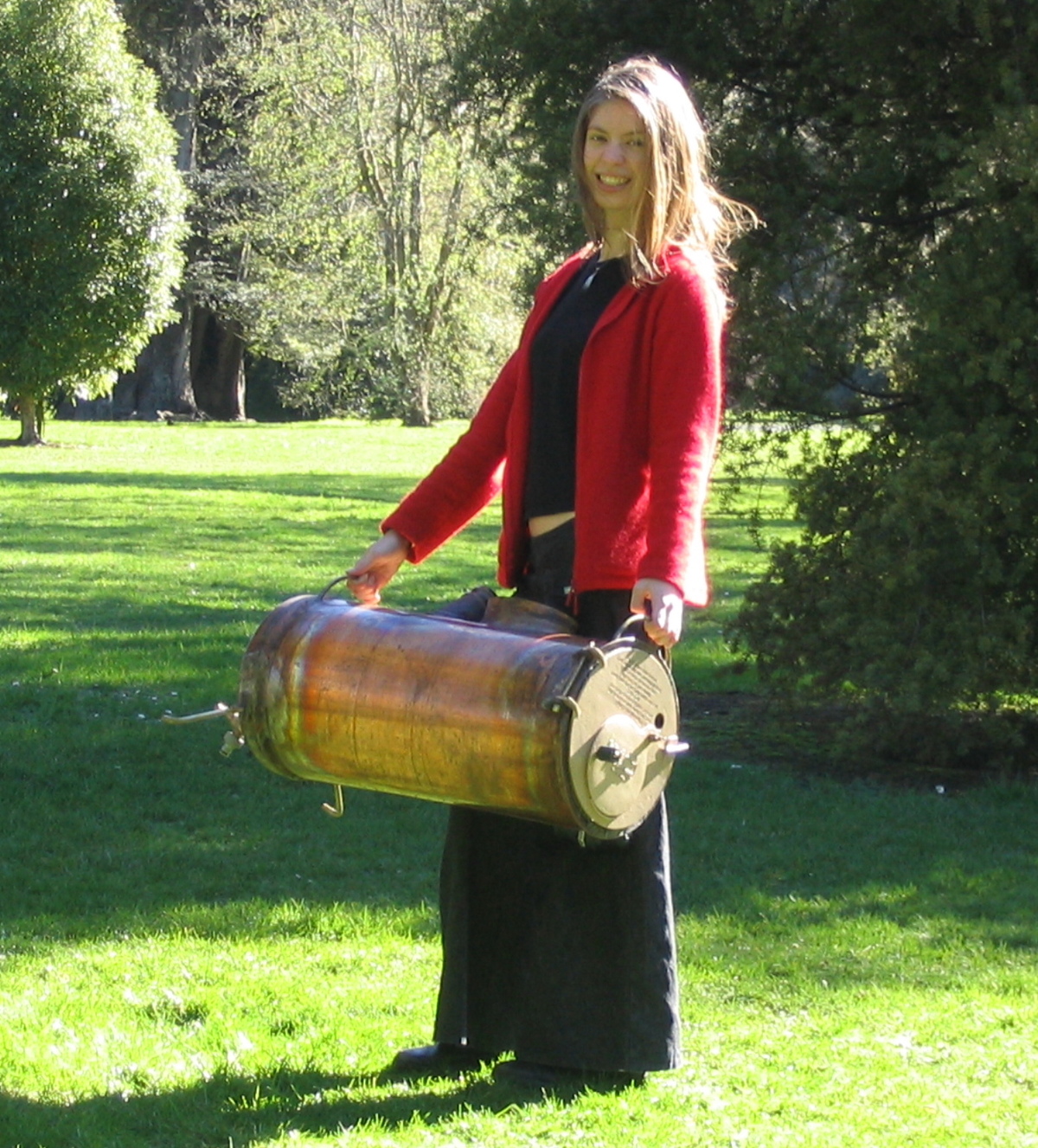
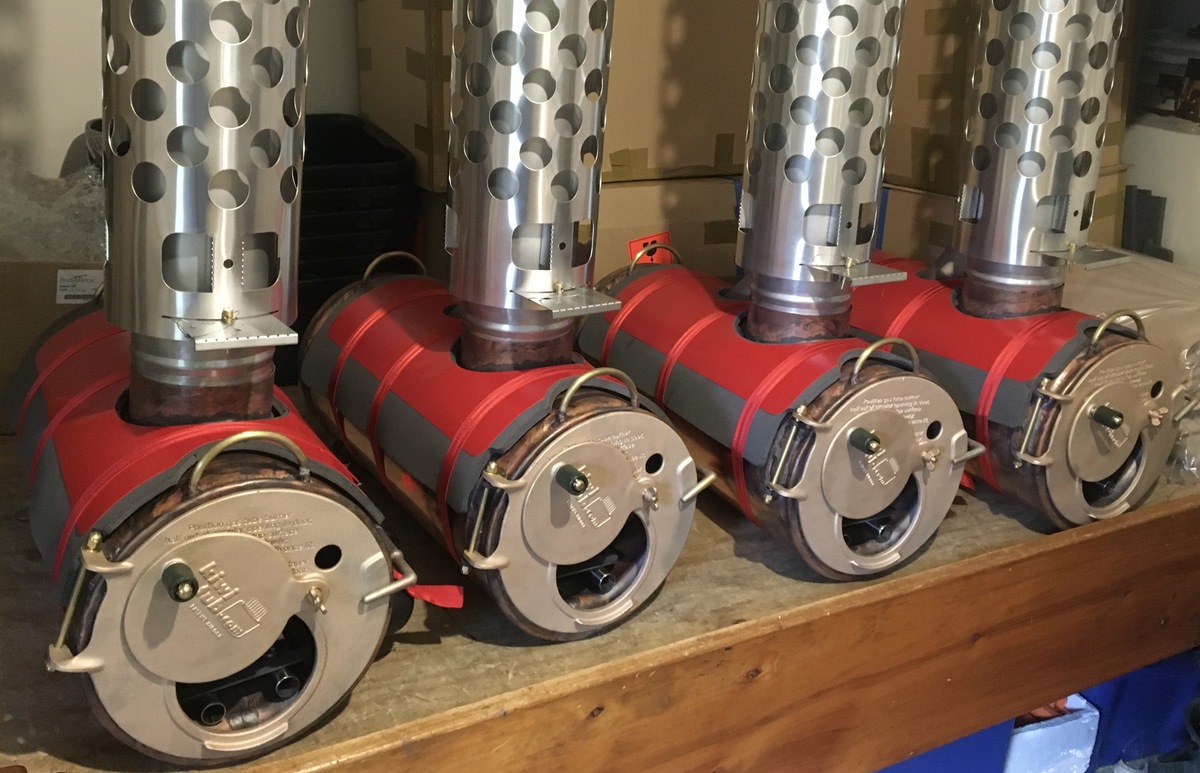
The burner is 330mm in diameter, 730mm long and weighs around 24kg. One person can carry it, though two are better over distance, using the large brass lifting handles at each end.
Why copper?
The burner is made from copper for a reason.
Copper transfers heat far better than stainless steel, which means it pulls heat efficiently from the flame through the metal wall and into the surrounding water. It also resists seawater corrosion and handles repeated heating and cooling extremely well.
The inner copper cylinder forming the firebox is corrugated for strength and increased heat-transfer surface area. A stainless steel baffle spreads the flames across the chamber and creates a longer flame path to heat the water more effectively.
The burner also comes with a 15mm thick insulating jacket to reduce heat loss in cold, wet, windy or snowy conditions.
Running the burner on firewood
To run the burner on firewood, place the stainless steel fire grate inside and build the fire on top of it.
The grate has two perforated stainless steel tubes underneath that draw fresh air into the fire and improve combustion. This helps the burner perform strongly on dry firewood.
Good dry wood is important. As with any fire, poor fuel will make a poor result. When the burner is running well, there is very little smoke from the flue — mostly hot rising air.
If you are using firewood, stop feeding the fire before the tub reaches full temperature, as the fire can take a while to die down. It does not take much practice to get the timing right.
The burner has a stainless steel mesh ash guard built into the cowl, but no fire system is perfectly risk-free. If there is any fire risk at all, we strongly recommend running the burner on gas instead.
Running the burner on gas
To run the burner on gas, simply remove the fire grate, place the stainless steel LPG tube burner inside the main burner and light that instead.
The gas burner runs from a standard 9kg LPG bottle, just like a portable gas barbecue. It is rated at 36kW, which is why the kiwitub can heat a large volume of water quickly.
The kiwitub is designed for outdoor use under adult supervision and manual control. There is no automatic temperature cutoff. When the water is hot enough, simply turn off the gas and leave it off. The insulated tub will stay bathing hot for hours.
For B&Bs, farm stays, tourist huts and accommodation businesses, we recommend the owner or operator shows guests how to run the burner, or does it for them. The system is simple, but it still needs to be used correctly.
Other fuels
Any heat source in the burner will heat the tub water, which opens up possibilities for other solid fuels. Any experimenting beyond firewood and LPG is entirely at your own risk.
A useful safety buffer
There is a safety buffer built into the physics.
As the tub water gets closer to hot bathing temperature, the heating rate naturally slows. On gas, starting with very cold winter water, the temperature may rise quickly at first, then take progressively longer to climb the final few degrees.
So the water does not suddenly become blazingly hot. You still need to check the temperature and operate the burner sensibly, but the system is naturally forgiving.
Built for serious longevity
The main burner has no moving parts like pumps or motors to wear out. Around 75% of the heat from the burning chamber is transferred into the surrounding water and circulated into the tub, so the burner itself does not run like a cast-iron potbelly stove designed to radiate heat into a room.
It is a dedicated water heater, built from materials chosen for heat transfer, corrosion resistance and long life.
Copper lasts. There are centuries-old copper roofs still doing their job in Europe, and copper nails and sheathing have survived in old shipwrecks long after the timber has gone.
Only time will tell exactly how long a kiwitub burner will last, but it has been designed for a very long working life.
Other uses for the burner
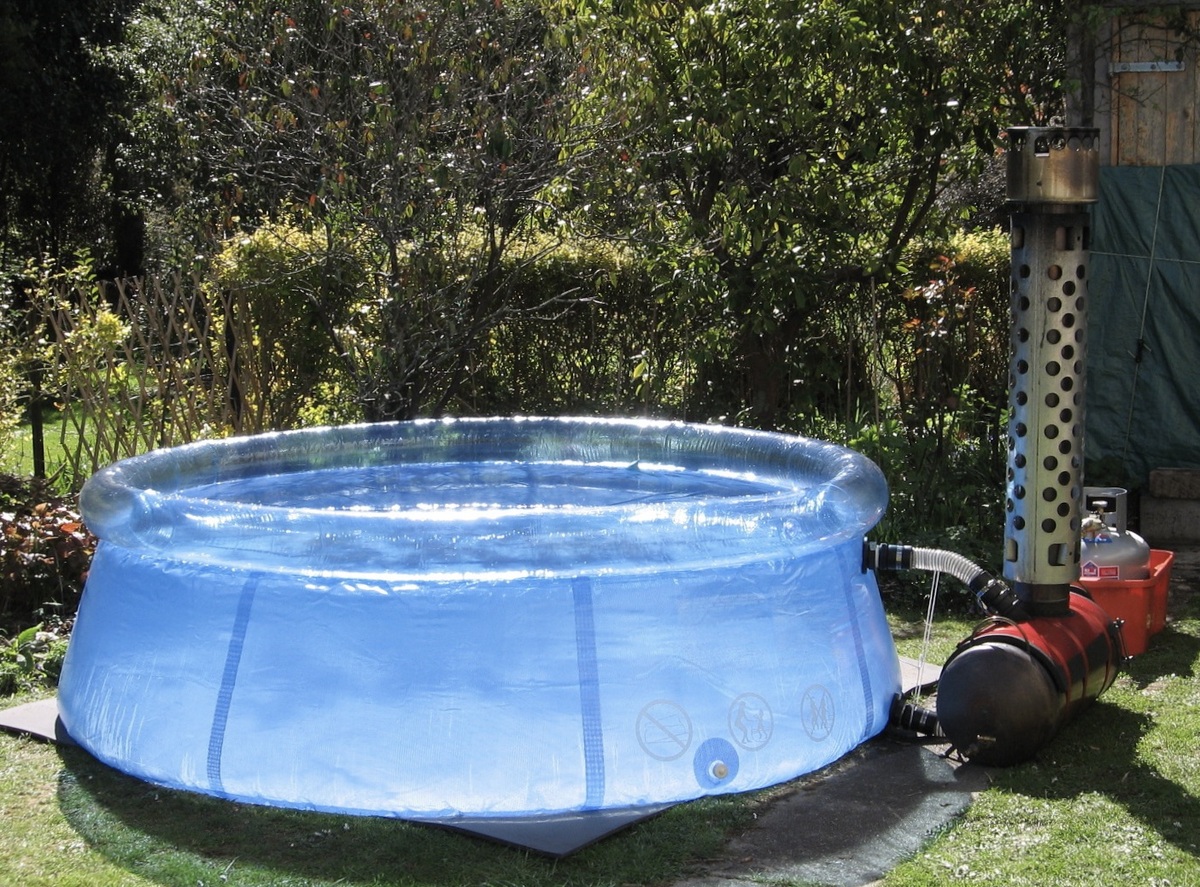
The burner was designed for the kiwitub, but it can also be used to heat other tubs, tanks and water containers.
We sell the burner on its own with the hoses and fittings required. It is a straightforward DIY job: drill two holes, fit the standard 50mm plumbing tank fittings, then connect the kiwitub hoses.
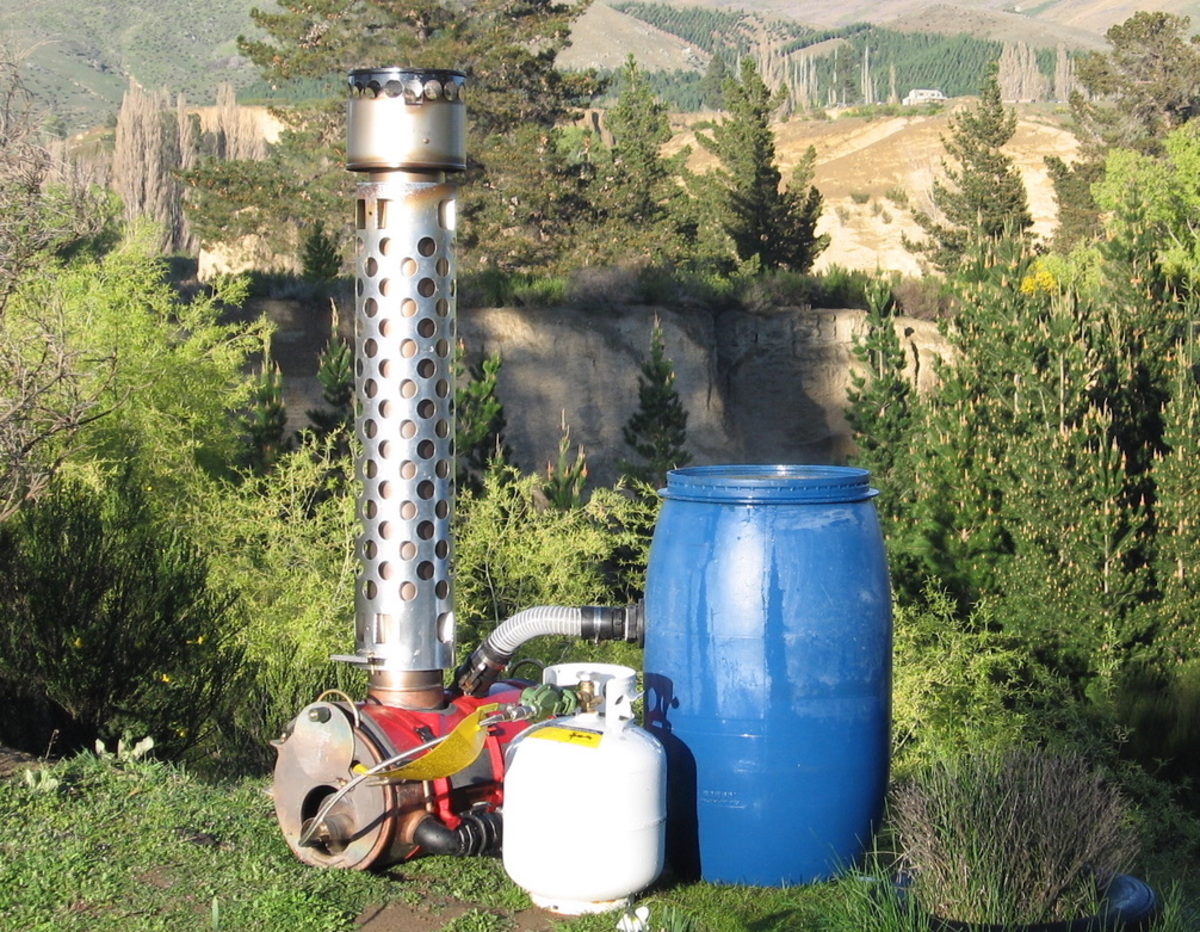
The burner has been connected to spa pool shells, cedar hot tubs, cast-iron baths, plastic tanks, farm barrels and other water containers. A 150L barrel can be heated to hot washing water in about 10 minutes on gas, making it useful for camping, outdoor catering and remote work situations.
The gas tube burner can also be used as a simple outdoor barbecue setup with a suitable metal plate above it. Just turn it right down, or it will cook things very quickly.